find your perfect postgrad program
Search our Database of 30,000 Courses
Posted April 27, 2026
From Lahore to London: my Chevening journey at UCL
Growing up in Lahore, cardiovascular disease was never an abstract statistic to me. As a cardiac perfusionist. I worked at the most acute intersection of human vulnerability and clinical precision. I saw what modern cardiac care could achieve when resources and expertise aligned, and I saw just as clearly what happened when they did not. That gap became my reason for applying to Chevening. Not just to study, but to return equipped to help close the gap.
Today, I am a Chevening Scholar from Pakistan, pursuing an MSc in Cardiovascular Science at University College London, and the experience has already reshaped how I think about medicine, technology, and what meaningful change actually requires.
UCL’s program is challenging, but incredibly rewarding. Taught by leading scientists and clinicians, it covers the molecular and cellular mechanisms underpinning cardiovascular disease, animal models used in research, and the ethical frameworks that govern how science moves from bench to bedside. My favourite modules – Drug Discovery II, Clinical Cardiology, Animal Models of Cardiovascular Disease, and Genetics of Complex Cardiovascular Diseases – have deepened my scientific foundation in ways that directly inform how I think about treatment design and health systems at scale. Coming in with a clinical background has been both an advantage and a humbling experience; the bench science challenges you to think far beyond the operating theatre.
What I could not have anticipated was the privilege of learning from people actively rewriting the field. In our Heart and Circulation module, Professor John Martin, the British Heart Foundation Professor of Cardiovascular Science at UCL shared his pioneering work exploring whether a patient’s own stem cells, injected into the heart within hours of an attack, could improve long-term recovery and delay the onset of heart failure. For someone who has spent years keeping hearts beating during surgery in Lahore, hearing that research discussed in real time felt genuinely electric.
Equally striking was a guest lecture in Drug Discovery II from Professor Mervyn Singer, Professor of Intensive Care Medicine at UCL, best known for co-leading the team that developed the UCL Ventura CPAP device during Covid-19, going from concept to prototype in under 100 hours and deploying it across 120 NHS hospitals and over 100 countries. What stayed with me was not the innovation alone, but the instinct behind it, that urgency and ingenuity, combined, can bridge enormous gaps in care. That is the spirit I hope to carry home.
Beyond the lecture theatre, Chevening has opened doors I did not expect. Attending the Geopolitics Directorate Scholars Reception at the Foreign, Commonwealth and Development Office held in the historic Locarno Suite was a reminder of the diplomatic significance this scholarship carries. The monthly Chevening community meetups have been equally formative. Scholars from dozens of countries, across every discipline imaginable, gathered around a shared conviction – that knowledge without application is a missed opportunity. Those conversations have pushed me to think more expansively about leadership, about policy, and about what it actually takes to drive systemic change.
London itself has been an adjustment and a gift in equal measure. Coming from Lahore, the pace, the grey skies, and the sheer scale of the city took some getting used to, but UCL's international community made it feel surprisingly familiar, surprisingly quickly. There is something grounding about being surrounded by people who are all, in their own way, figuring out a new city while trying to do meaningful work.
My thinking has evolved considerably since arriving. With a growing focus on digital health, data-driven decision-making and responsible AI, I am increasingly drawn to how technology can extend the reach of clinical expertise; particularly in low- and middle-income countries where traditional care models alone cannot meet demand. The goal is not innovation for its own sake. It is translation: turning clinical insight into scalable, equitable solutions that function within the real constraints of health systems like Pakistan’s.
Long term, I want to bridge medicine, innovation and policy to help build systems that are not only more equitable, but more intelligent. Chevening has not just given me the tools to pursue that, it has sharpened my belief that it is possible.
To anyone from Pakistan sitting on a Chevening application they are not sure about: finish it. The version of yourself on the other side is worth meeting.
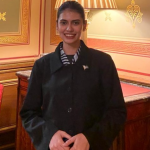 Author’s bio: Ayesha Yaqoob is a Chevening Scholar from Pakistan pursuing an MSc in Cardiovascular Science at UCL.
A healthcare professional with a background in cardiac care, she is passionate about digital health, responsible AI, and translating clinical insight into scalable healthcare solutions for low- and middle-income countries.
Related articles
Lifting As We Climb…Six Months Into My Chevening Journey
Categories
- Accommodation
- Budgeting
- Coronavirus (Covid-19)
- Courses
- Distance Learning / Online Study
- Fees
- Funding
- General
- Infographic
- International Students
- Jobs and Careers
- Mature Students
- MBA Programs
- Other
- Personal Statement
- PGCE
- PHD
- Student Life
- Student Welfare
- Study Abroad
- Study Advice
- Study In Australia
- Study In Europe
- Study In Ireland
- Study in UK
- Study In USA
- Theses and Dissertations
- Top 10 Lists
- Universities
