find your perfect postgrad program
Search our Database of 30,000 Courses
- by Charlotte King
- In General, Courses, Study in UK, PHD
Posted May 29, 2026
Applying for a PhD – and the process to completion
Professor D J Mapps, BEng, PhD, CPhys, C.Eng, FInstP, FIEE, MIEEE, is an Emeritus Professor at the University of Plymouth. He has provided the following article as a result of his personal experience in supervising and externally examining PhDs as well as publishing research papers at national and international level.
“The first thing to note is that a PhD is nothing like a first degree. Whereas a first degree gives the recipient a qualification reflecting competence and knowledge in a certain subject, a PhD is a measure of the recipients’ ability to investigate a topic, seek out new knowledge and analyse the results in the context of what has been published before. In a way it can be seen in the context of Sherlock Homes and Dr Watson. Dr Watson, despite the title, demonstrates capability and knowledge in medicine (eg similar to a first degree) whereas Sherlock Holmes demonstrates many of the characteristics shown by the holder of a PhD.
Before applying for a PhD the student has to decide whether they have the personal characteristics to succeed in research. If so, then the next stage is to think about is an area of knowledge to frame the subject of a potential PhD. It may help to find and read a recent published research paper on this topic. A generalised ‘Review’ paper might be the best choice.
Unfortunately, almost no universities will respond to an application for PhD without there being an active senior research staff member looking for a student in this area of research. Therefore, the potential applicant needs to seek out research groups which line up with their research interest. This is because all PhD students need to register under a specialist first supervisor (or Director of Studies) plus at least one other supervisor to make up a small ‘team’. Sometimes university research groups will have some available funding and will advertise for PhD candidates. In such cases selection is carried out after a competitive interview.
If successful, the PhD student embarks on what is usually a full-time three-year research project. The formulation of the plan for the research takes place with the student and supervisors during the first three to six months. This is accompanied by an extensive search of the published research forming the background to the project. At the end of this period the project should have a name which may (or may not) carry through all the way to the title of the PhD thesis.
It has become customary during the next few months for the student to learn any specialist techniques needed through specific instruction and short courses. After that there is a period (of maybe around 18 months) during which there are regular supervisory meeting with gradually reducing supervisor input, until during the last year of the project, the student is more or less working on personal initiative towards the substantial target of writing the PhD thesis. The length of this thesis varies from topic to topic – for example, in engineering it is often quoted to be 40,000 words.
Once the thesis has been approved by the supervisors it can be submitted to the university for examination. The examination is by an acknowledged expert in the field from an independent university or organisation having no previous knowledge of the project or the student. An oral examination lasts at least three hours with the main supervisor in attendance – although the main supervisor is not allowed to take part unless invited by the external examiner. If the examiner recommends the award, the university will send a letter to the candidate confirming the award after which the candidate will be able to use the prefix ‘Dr’ before their name.
Final comment
A PhD experience requires, not just intelligence, not just knowledge, not just a curiosity driven and enquiring mind. It demands patience, mental toughness and a desire to succeed. A popular quotation about research in general is that it requires 5% inspiration and 95% perspiration – although I would not go that far, personally. The rewards of having a PhD are great and certainly well worth the effort. The financial income of the PhD student is small, but the ultimate financial rewards usually far surpass this.
Part-time PhD
In some universities it is possible to study a PhD part-time. This allows a candidate to carry on with another employment in parallel. Attendance of at least 16 hours per week in the university is required and the PhD completion time is lengthened to six years. The requirements for supervision remain the same.
PhD by Independent Published Research
It is possible that, if a person without a PhD has already had a career in research resulting in a substantial body of high-level original work, then the work can be submitted for the award of PhD. It should be said that not all universities offer this possibility.”
Are you considering postgraduate study? Use our course search to find your perfect postgrad program.
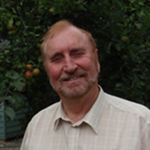 Author’s bio: Professor Des Mapps is an Emeritus Professor in the University of Plymouth, UK with extensive experience in nano-magnetism in magnetic thin films and devices. He has published 164 papers in International Research Journals, 13 Patents and 77 major reports for industry. He is a former Chairman of the UK government EPSRC Engineering Panel. He has supervised 28 successful PhD students and numerous MScs. As external examiner in other universities he has examined 36 PhDs, 3 MPhils and around 50 MScs.
Related articles
Categories
- Accommodation
- Budgeting
- Coronavirus (Covid-19)
- Courses
- Distance Learning / Online Study
- Fees
- Funding
- General
- Infographic
- International Students
- Jobs and Careers
- Mature Students
- MBA Programs
- Other
- Personal Statement
- PGCE
- PHD
- Student Life
- Student Welfare
- Study Abroad
- Study Advice
- Study In Australia
- Study In Europe
- Study In Ireland
- Study in UK
- Study In USA
- Theses and Dissertations
- Top 10 Lists
- Universities
