find your perfect postgrad program
Search our Database of 30,000 Courses
Feb. 11, 2026
A breakthrough in hearing loss research at UCL
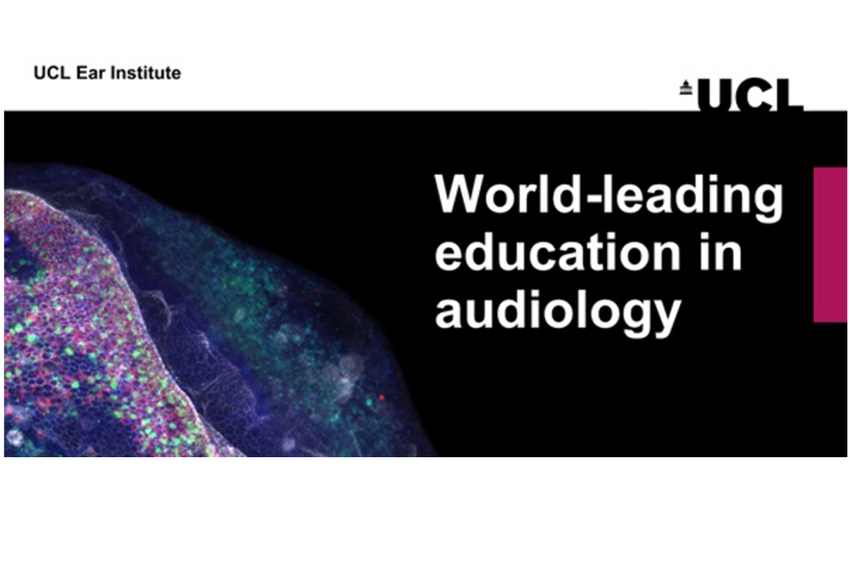
Researchers at UCL Ear Institute and UCLH have completed the world’s first clinical trial of a drug designed to help the ear repair itself. This marks a major step forward, as people with permanent hearing loss currently rely on hearing aids, which amplify sound but do not address the underlying damage.
What causes most hearing loss?
Inside the inner ear are tiny sensory “hair cells” that enable us to hear. Ageing and long-term noise exposure can damage or destroy these cells, and, unlike in some animals, humans cannot naturally regenerate them. As a result, hearing loss usually worsens over time.
What does the new drug aim to do?
The experimental drug, LY3056480, is designed to stimulate the regeneration of these damaged sensory cells. If effective, it could help restore some natural hearing – something currently impossible with existing treatments.
How did the trial work?
The study was part of an international collaboration involving teams in the UK, Germany and Greece. Participants aged 18 to 80 with mild to moderate hearing loss took part. Each received three small injections of the drug through the eardrum into the middle ear.
Before and after treatment, researchers carried out hearing tests, measuring:
- The quietest sounds participants could detect
- How well they understood speech in noisy environments
What did the researchers find?
The trial showed the drug is safe, which is a crucial first step. While it did not restore hearing across the whole group, there were encouraging signs: around 45% of participants could detect sounds at least 10 decibels quieter than before treatment. This did not meet the trial’s strict success criteria, but it suggests the drug may have had an effect inside the inner ear and could be promising for future development.
Why is this exciting for the future?
Hearing loss is the most common sensory impairment worldwide, and current treatments do not repair the core problem: the loss of sensory hair cells. A therapy that helps these cells regenerate would represent a major shift in hearing care.
This trial shows that regenerative approaches – once thought impossible – may one day offer real solutions. The insights gained will help researchers design future studies and advance the field of regenerative hearing medicine.
Read the full UCL news article.
Looking for funding for postgraduate studies? Check out the exclusive bursaries on offer from Postgrad Solutions.
Content added on 11th February 2026.
Most Popular News
-
Discover London School of Hygiene & Tropical Medicine’s global health courses
Feb. 11, 2026What if more people could access life-changing medicine? What if health inequalities were reduced in your community? What if your studies could spark real-world impact?
-
A breakthrough in hearing loss research at UCL
Feb. 11, 2026Researchers at UCL Ear Institute and UCLH have completed the world’s first clinical trial of a drug designed to help the ear repair itself.
-
Invest in your career with a postgraduate degree from Falmouth University
Feb. 3, 2026Deciding to study a postgraduate degree is not only a chance to deepen your knowledge and expand your professional networks – it is also an investment in your career potential.
-
University of Aberdeen India campus to open in summer
Feb. 2, 2026The University of Aberdeen is opening a branch campus in Mumbai, making it the first Scottish university to open an in-country presence in India.
