find your perfect postgrad program
Search our Database of 30,000 Courses
Postgraduate Programs in Supply Chain Management
Find postgraduate programs in SUPPLY CHAIN MANAGEMENT
In the days when the Ford Motor Company famously manufactured steel and other components of its cars itself – rather than buying them from suppliers and assembling the final product – logistics was the term applied to a firm’s movement of materials from origination to customer. Supply chain management, the modern term for logistics activities, acknowledges that what used to be done by one firm is now done by many. Firms typically rely on a network (or supply chain) of firms to provide them with the raw materials, parts, and other inputs for their own efforts.
And, of course, it is not just manufacturing firms that depend upon a supply chain. A service firm, such as a Chinese restaurant, also relies on suppliers. It does not grow its own rice or raise its own chickens (we assume). Instead, it relies on deliveries of rice, chickens, soy sauce, and so on – at the right time, in the right quantity, in the right condition, and at the right price.
In developed economies, logistics typically represents 20% of gross domestic product. In developing economies, it represents substantially more.
Trends in supply chain management
Numerous substantial trends continue to drive this field, including:
- The need of supply chains to be increasingly integrated, making the flow of information as important as the flow of materials and services.
- The reliance of more and more firms on the outside specialist providers of materials and services (and information), making the management of such relationships increasingly important.
- The requirement of just-in-time operations for goods to be delivered precisely when demanded – and of entirely predictable, consistent quality.
- Globalisation producing more far-flung networks of suppliers, crossing national boundaries.
- Terrorism (and weather) risks, which threaten disruption of networks.
- Environmental concerns giving rise to reverse logistics, in which goods and materials are returned for repair, reuse, or recycling.
- The shift in power downstream to end users.
Choosing a supply chain management masters program
Most masters degree programs in supply chain management are one year in length. Many courses in this field, reflecting the internet-driven nature of the field itself, are offered partially or fully online. In addition, many of the programs are ‘lock-step’, requiring all students to take exactly the same courses in the same order. In other words, many programs have no electives/specialised courses on offer.
Many programs require several years or more of experience, as with traditional MBA programs. This is nearly unique to supply chain management. Only the related operations (manufacturing) management field features a comparable percentage of post-experience programs.
A substantial number of courses offer a ‘pre-master’ lasting one year – to allow those without a substantial background in the field to get up to speed. Tilburg University (the Netherlands), for instance, offers a Pre-Masters Supply Chain Management Program that teaches courses in accounting, finance, marketing, statistics, mathematics, economics, and management.
Supply chain management – a global perspective
Supply chain management increasingly features global partnerships, so taking a purely local or national view is increasingly disadvantageous. Even though many practices are similar in different parts of the world, substantial nuances are present when dealing with international suppliers. So, having an international network is certainly of value given the likelihood of sourcing abroad.
With this in mind, some programs have been developed with a decidedly international orientation. The University of Westminster (UK), Ecole Supérieure Internationale de Commerce (France) and Molde University (Norway), all offer degree programs in Logistics, Transport or Distribution, in which students can attend the first semester at one of the partner schools and the second at another school. Each of the schools has a somewhat different specialisation, thereby offering students an opportunity to focus their studies on whatever interests them most.
Supply chain management – an interdisciplinary field
Supply chain management is an interdisciplinary field, albeit with substantial quantitative underpinnings. Therefore, the range of requirements is great, depending upon the focus of the programme. Some programs require a prior degree in science, math or engineering; others look for those with a ‘relevant major (concentration)’; while some prefer students with a first degree in business or simply a decent-quality first degree of any sort.
Many programs also look for:
- Quantitative ability and knowledge
- Engineering background
- Work experience in supply chain management, logistics, operations management, information technology, or related fields.
MBA in supply chain management
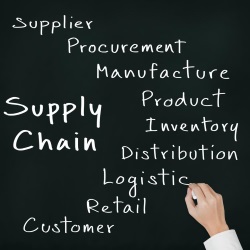 Studying an MBA in Supply Chain Management will give students knowledge of business management alongside modern thought processes related to supply chain thinking. Aspects to be explored will include marketing, sourcing, logistics, operations, and customer service.
Middlesex University London offers an MBA in Shipping and Logistics which can be studied part time over two years via distance learning. This MBA in Shipping and Logistics is offered by Middlesex University Business School in partnership with Lloyd’s Maritime Academy and features study modules in:
- Maritime Administration
- Ship Finance
- Risk Management
- Human Resource Management
- Logistics and Supply Chain Management.
PhD in supply chain management
Supply Chain Management focuses on the efficient management of systems of people, products, resources and information that enables a service or product to reach the customer in the best way possible. This is closely linked with logistics and by studying this at PhD level you will be setting yourself up well for a successful career in management of manufacturing operations, service and distribution, or as a logistic analyst – not to mention obviously academia in this field should this option appeal to you.
Cranfield University offers a PhD program from its Centre For Logistics and Supply Chain Management (CLSCM) which can be taken full time over three years.
Career opportunities in supply chain management
Managing the movement of both goods and information between suppliers, manufacturers and customers includes processes that were long regarded as separate: materials management, distribution management, purchasing, information management, and so on. Integrated planning and coordinating operations not just within a firm but also with its suppliers and distributors represents a large but necessary step for those seeking to remain competitive in today’s economy.
Understanding how to manage relationships with firms that may be of vastly different scale, operating a very different sort of business – employing different technologies and people, with substantially different rates of change as well as goals, etc – in a different cultural and economic environment, far away from you, is hardly simple. This set of challenges means that supply chain management is extremely important to firms.
The typical career path involves specialising initially in one narrow field (as the job titles below suggest). Over time, however, those able to master multiple fields, and to gain an overarching understanding of the strategic choices facing their firms, will be particularly highly prized.
Typical job titles
- Inventory analyst
- Materials scheduler
- Fleet manager
- Warehouse operations specialist
- Purchasing manager
- Supply chain analyst
- Transportation manager
- Procurement associate
- Process engineer
- Facilities manager
Professional associations iin the UK and US
- Chartered Institute of Logistics and Transport (UK)
- Chartered Institute of Purchasing and Supply (UK)
- Institute for Supply Management (US)
- Council of Supply Chain Management Professionals (US)
Related articles
Building A Sustainable Future: Exploring A Career In Transport Planning
How To Choose The Best Postgraduate Degree For Your Career Goals
Postgrad Solutions Study Bursaries
