find your perfect postgrad program
Search our Database of 30,000 Courses
Career paths in geotechnical software
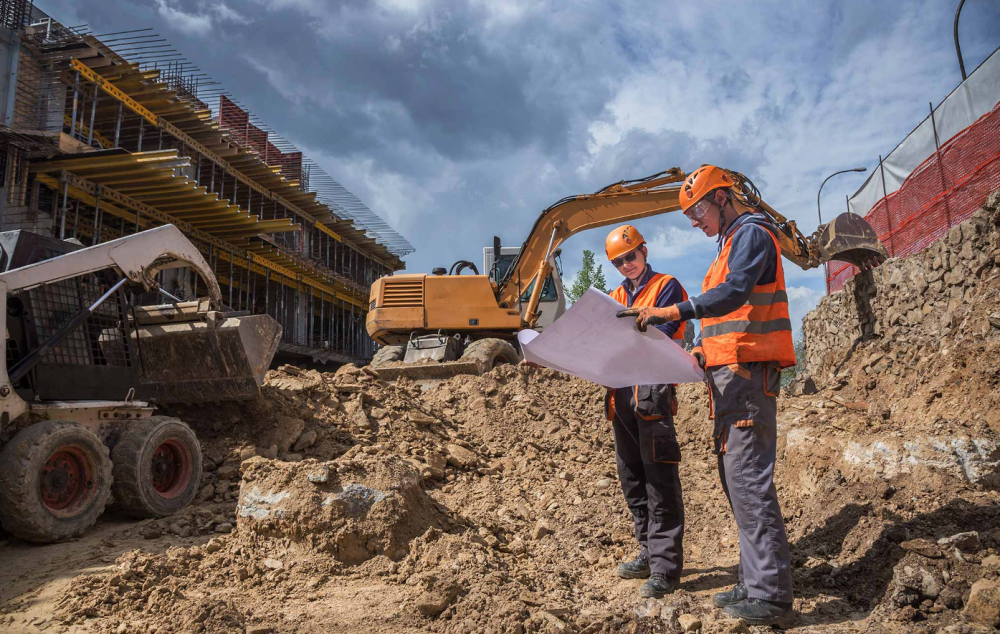
If you have just completed your masters degree in geotechnical engineering, civil engineering or a related field, you will be standing at an exciting crossroads where theoretical knowledge meets practical application. But here’s the reality check: that degree alone won't make you indispensable in today's competitive engineering market.
The secret weapon? Gain specialised software proficiency.
While your peers are still fumbling with basic tutorials, mastering industry-standard geotechnical software can catapult you into roles that combine technical depth with career growth.
Today, geotechnical careers are no longer just based on spreadsheets, hand calculations or on-site roles. The industry has evolved and has become a powerful career accelerator. Now, geotechnical engineers can confidently work with tools such as PLAXIS, GeoStudio, and Rocscience (RS2), which are in demand across consulting firms, infrastructure projects, academia, and even at global software companies.
Let me walk you through the landscape of opportunities waiting for software-savvy geotechnical engineers.
The rise of software-driven geotechnical careers
Modern infrastructure brings projects which demands seeps and expert data-backed decisions. With numerical modelling, which has become prominent in geotechnical design, companies increasingly look for engineers who can simulate real ground behaviour, not just describe it theoretically.
What to do in a career after a masters degree in Geotechnical Software
Today’s geotechnical industry is accompanied by digital tools and advanced software workflows, and with rapid growth in infrastructure projects across Europe and North America, engineers with strong modelling skills are sought after across specialties like foundations, piling design, slope stability, tunnels and rock mechanics.
Here’s your chance to stand out from the crowd. Pair your academic degree with practical software skills, particularly in tools such asPlaxiss software training online, Geostudio training, or RS2 training, where you can position yourself for some of the most exciting and high-impact roles in engineering.
Let’s break down the most promising career paths, the demand drivers and where the opportunities are strongest.
Why software skills matter now
The amount of global investment in geotechnical analysis software continues to rise as engineering background deal with increasingly complex projects like high-speed rail, sustainable urban infrastructure and deep excavations.
With advanced tools such as PLAXIS, GeoStudio and RS2, they are now standard in companies that aim to design safe, cost-effective and resilient structures. This demand is backed by strong market growth; for instance, North America leads the geotechnical engineering software market, and Europe follows closely behind with significant uptake across major infrastructure and sustainable development work.
In fact, Europe accounts for roughly 22% of the global geotechnical software market, driven by stringent building codes and environmental regulations, particularly in countries like Germany, the UK and France. Likewise, the US construction and transportation sector is one of the largest adopters of these advanced tools.
PLAXIS 2D/3D Skills

Career paths: Foundation design engineer, tunnel design specialist, deep excavation consultant, offshore geotechnical engineer.
If you are someone who gets excited about foundation design, tunnel engineering or deep excavations, PLAXIS is your gateway. This finite element software has become the gold standard for analysing deformation and stability in geotechnical projects.
When you undertake a PLAXIS software training course, you learn about learning button clicks while understanding how to model complex soil behaviour, interpret stress-strain relationships, and make design decisions that could affect millions of dollars in construction costs.
So, whether you pursue PLAXIS software training for flexibility or opt for intensive workshops, the investment pays off quickly. Junior engineers with PLAXIS proficiency often command 15 to 20% higher starting salaries than their peers.
Read more: PLAXIS Software: The Complete Guide for Beginners
The Rocscience Suite: Rock Mechanics Specialisation
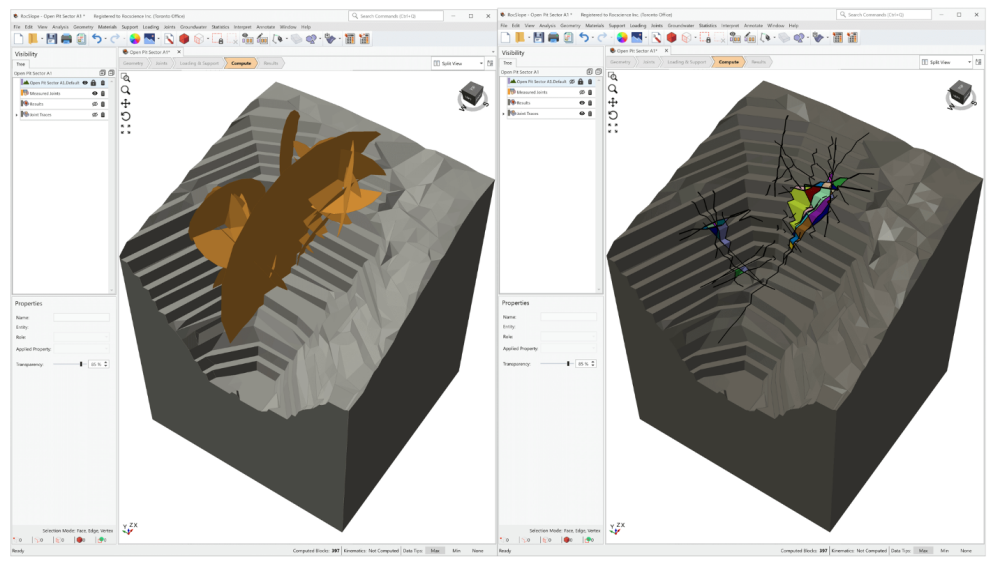
Career paths: You can choose to become a mining engineer, tunnelling specialist, rock slope engineer, underground construction consultant or geotechnical researcher in rock mechanics.
If you are someone who wishes to step into the dramatic world of rock engineering, where mining, tunnelling through mountains and slope stability in rocky terrain interest you, then Rocscience tools become your primary language.
When you complete your degree in RS2/RS3 training, it focuses on 2D/3D finite element analysis specifically for rock mechanics. This software is indispensable for anyone working in underground excavations, rock slope design or tunnel support systems. The ability to model complex joint patterns, rock mass behaviour, and support interaction makes RS2/RS3 essential for rock engineering projects.
It is noted that broader Rocscience training helps introduce you to the concept of a complete ecosystem with RS3 for 3D analysis, Slide for limit equilibrium slope stability, with RocSupport for tunnel support design, and UnWedge for rock wedge stability. Each tool addresses specific challenges in rock mechanics.
The mining industry, in particular, hungers for engineers with Rocscience proficiency. With global demand for minerals driving new mining projects, specialists who can ensure safe, economical excavation designs are worth their weight in gold, sometimes literally.
The GeoStudio Ecosy by Stem: Comprehensive Geotechnical Analysis
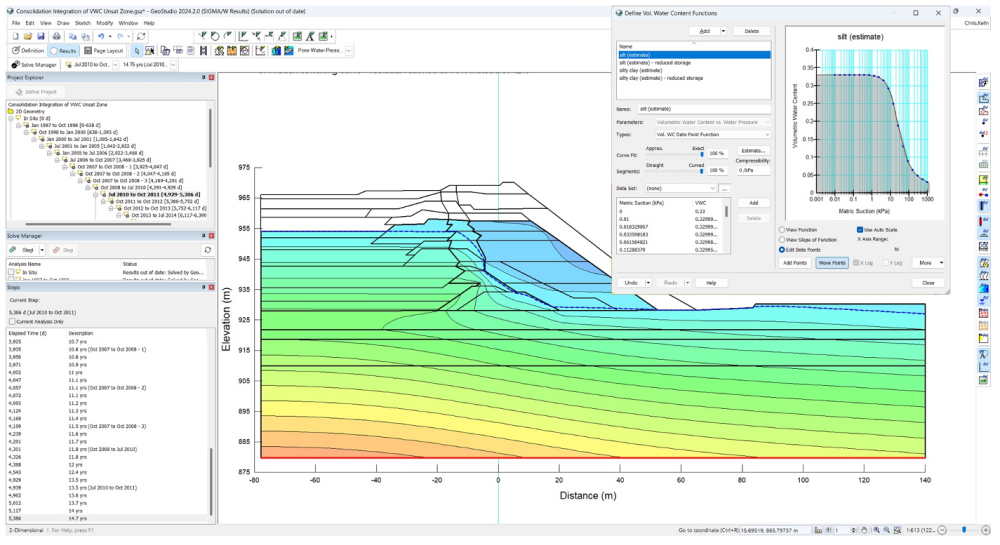
Career paths: Dam safety engineer, mining geotechnical specialist, environmental consultant, landslide mitigation expert, geothermal engineer.
GeoStudio is an integrated suite of subjects that address nearly every geotechnical challenge that you will face. From seepage analysis to slope stability, from stress-deformation to thermal modelling, GeoStudio covers it.
When you invest in a comprehensive GeoStudio training, you tend to learn about modules like SLOPE/W for stability analysis, SEEP/W for groundwater modelling, SIGMA/W for stress-deformation analysis, and QUAKE/W for dynamic earthquake analysis.
Here's what makes GeoStudio particularly valuable: while GeoStudio 2D handles most conventional projects efficiently, familiarity with GeoStudio 3D capabilities sets you apart when projects demand it.
The subject’s ability to seamlessly transition between 2D efficiency and 3D accuracy makes you adaptable, which is a quality every employer values.
Practical steps to start your software-enhanced career
If you are clueless about how to establish your career after a masters degree, then wait no longer; follow these steps to start your career journey.
Start with fundamentals: Choose one primary software based on your interest area, and if you are passionate about soil mechanics and foundations, begin with PLAXIS. Interested in earth structures and environmental projects? GeoStudio is your starting point. Drawn to rock engineering? Start with RS2.
Pursue structured learning: With YouTube tutorials, you can get a chance to gather knowledge with comprehensive course content from experienced practitioners. Online training offers flexibility for working professionals, while intensive workshops provide immersive learning and networking opportunities.
Build a portfolio: As you complete training modules, you get a chance to develop a portfolio of case studies. When you build your portfolio, you establish your project work. So, the next time you walk into an interview with a portfolio demonstrating practical software application, you're already ahead of 90% of candidates.
Get certified: Many software providers offer certification programs. Get enrolled in those advanced learning courses and upskill your skills further. (Visit: PIGSO LEARNING’s Geotech Software Training Programs)
Stay current: Geotechnical software evolves rapidly. Subscribe to update newsletters, participate in user forums, and attend webinars. The engineer who knows the latest features and capabilities remains relevant.
The bottom line
Once your masters degree is done, it opens the doors of opportunity for you. Your masters degree proves you understand the science of the ground. With geotechnical software expertise, you can apply that science in the real world.
Whether you dream of designing mega infrastructure, working underground, teaching future engineers or supporting cutting-edge software solutions, the right training, such as PLAXIS 2D/3D Software Training Online, Geostudio course or RS2 training, can turn that dream into a clear career path.
The ground beneath us may be uncertain, but your career doesn’t have to be.
 What software are you planning to master first? The choice you make today could define your career trajectory for the next decade.
Author’s bio: Mayank Panchal is the founder of PIGSO Learning.
He has many years of experience in teaching, curriculum development, and instructional design in civil engineering, and digital marketing space. His passion for conceptual and deep research-based learning helps to understand the subject in depth.
Are you looking for the perfect postgrad program? Our course search will help you make the right decision.
Find your PERFECT POSTGRAD PROGRAMRelated articles
Top Employers Hiring Engineering Postgraduates in 2026
How Numerical Modelling Skills Help You Land Better Jobs
Top 20 Engineering Universities In The UK
